
Type 2 Home EV Charger
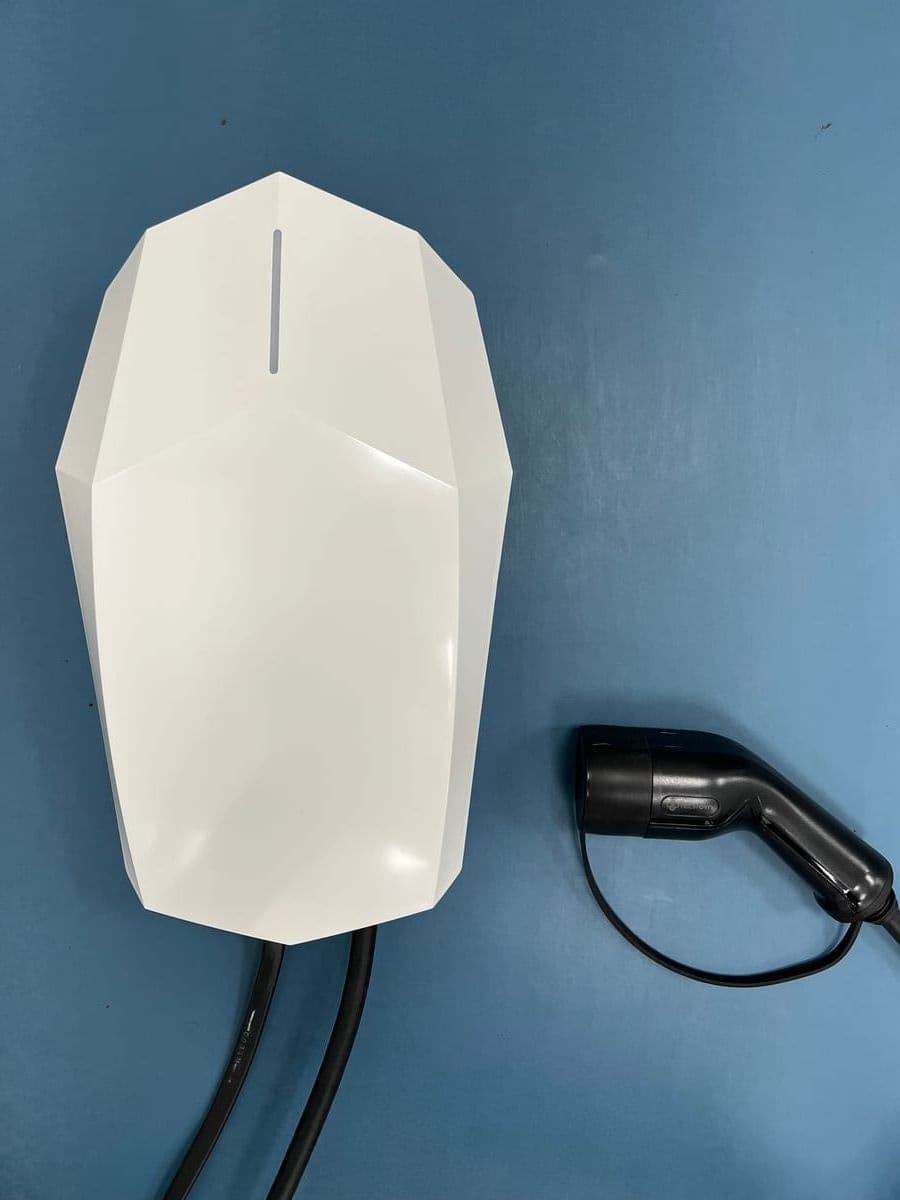
The Type 2 Home EV Charger is a wall-mounted AC charger for households, in 7.4 kW single-phase (32 A) or 22 kW three-phase versions, tethered or socket. The 7.4 kW model charges a 30 kWh EV with a 7.2 kW onboard charger in about 4 – 4.5 hours. Both carry a built-in Class 1 meter, IP55 enclosure, WiFi and OCPP 1.6J / 2.0.1.
Trusted by energy & industrial leaders






A Faster Home Charge, Managed From Your Phone
The Type 2 home charger is built for households that want more than an overnight trickle. The 7.4 kW single-phase version charges a 30 kWh EV with a 7.2 kW onboard charger in about four hours on the supply most homes already have (cars with a ~3.3 kW onboard charger charge at their own lower rate); the 22 kW three-phase version suits homes with a three-phase connection and a car that can accept the higher rate. Both carry the Type 2 (IEC 62196) connector, an IP55 outdoor-rated enclosure, and WiFi.
Built-in Class 1 energy meter, designed by Tech OVN's own metering team — the same engineers behind our utility smart meters. Every kilowatt-hour you charge is measured, not estimated, which is what makes the companion app's cost tracking trustworthy.
The Companion Home App
Every home charger pairs with the Tech OVN home app — a consumer companion designed for a single household, not a commercial operator. Schedule charging for the cheapest hours, watch the cost as it runs, and keep control of who uses the charger. These are the capabilities the app is built around.
Schedule off-peak charging
Set the charger to run during cheaper night-time or off-peak tariff hours automatically, so your EV is full by morning at the lowest cost.
Start & stop remotely
Begin or pause a charging session from your phone — no need to walk to the charger in the parking or basement.
Live power & session cost
Watch real-time power draw and a running rupee cost for the session as it charges, based on your tariff.
Monthly cost & history reports
See how much energy and money each month's charging used, with a full session-by-session history from the built-in meter.
Charge & cost limits
Cap a session by energy or by cost so you never overspend.
Push notifications
Get alerts when charging starts, completes, is interrupted, or when a fault needs attention.
Driver & vehicle profiles
Keep separate profiles for multiple EVs or family members, each with its own schedule, limits and history.
Household access control
Decide who in the household can start the charger, so a shared basement point isn't used by others.
The home app is the charger's companion app and is separate from our commercial charging management system (CSMS), which is for charge point operators running a network. App features are being rolled out with the product.
Technical Specifications
| Parameter | Specification |
|---|---|
| Power Rating | 7.4 kW (single-phase, 32 A) or 22 kW (three-phase, 32 A) |
| Price (India) | 7.4 kW: ₹31,500 + GST (₹32,000 with 4G) · 22 kW: ₹48,000 + GST (₹49,500 with 4G) per unit; ships from stock |
| Connector | IEC 62196 Type 2 — tethered cable or socket |
| Energy Metering | Built-in Class 1 energy meter |
| Connectivity | WiFi; 4G and Ethernet optional |
| App Control | Tech OVN companion home app (scheduling, cost, remote control) |
| Protocol | OCPP 1.6J, OCPP 2.0.1 |
| Safety | Overcurrent, Over/Under Voltage, RCD, Surge Protection, Emergency Stop |
| IP Rating | IP55 (outdoor-rated) |
| Authentication | Mobile App |
| Mounting | Wall-mount (indoor or outdoor) |
| Standards | Type-tested to IS 17017 (BIS); designed to IEC 61851-1; IEC 62196 Type 2 connector |
| Warranty | 2 years from date of dispatch |
Charging Time by EV Model
Approximate full-charge time on the 7.4 kW single-phase home charger, assuming a flat battery. The car's onboard charger sets the ceiling, so it is listed next to each model. In normal daily use most owners top up for an hour or two rather than draining to empty.
| Parameter | Specification |
|---|---|
| Tata Nexon EV (Medium Range, 7.2 kW onboard charger) | 30 kWh battery — approx. 4 – 4.5 hours to full |
| Mahindra XUV400 EV (7.2 kW onboard charger) | 39.4 kWh battery — approx. 5.5 – 6 hours to full |
| Tata Nexon EV (Long Range, 7.2 kW onboard charger) | 40.5 kWh battery — approx. 6 hours to full |
| MG Comet EV (~3.3 kW onboard charger) | 17.3 kWh battery — approx. 5 hours; the car limits it to ~3.3 kW, so a 7.4 kW unit is no faster than a 3.3 kW one |
| Tata Tigor EV (~3.3 kW onboard charger) | 26 kWh battery — approx. 7.5 – 8 hours; limited by the car's ~3.3 kW onboard charger |
| Citroen eC3 (~3.3 kW onboard charger) | 29.2 kWh battery — approx. 8.5 – 9 hours; limited by the car's ~3.3 kW onboard charger |
Times are based on the vehicle's usable battery capacity divided by the effective AC charge rate. Actual times vary with ambient temperature, battery state-of-health, and the vehicle's onboard charger limit — some EVs cap single-phase AC charging below 7.4 kW, in which case they charge at their own maximum rate.
How to Install a Type 2 Home Charger in India
Four steps from blank wall to first charge. The 7.4 kW version runs on single-phase; the 22 kW version needs a three-phase supply.
1. Confirm your supply and load
A 7.4 kW charger draws ~32A at 230V on a single-phase supply. Check your sanctioned load with an electrician — most Indian homes can support 7.4 kW. The 22 kW variant needs a three-phase supply, so confirm you have three-phase service before choosing it.
2. Run a dedicated circuit
For 7.4 kW single-phase: a dedicated 40A MCB on 6 mm² wire from the meter to the parking spot, with residual-current protection — a Type A RCD is enough only if the charger has built-in 6 mA DC leakage detection; otherwise use a Type B RCD. For 22 kW three-phase, the electrician sizes a three-phase breaker and cable to match.
3. Get building / RWA approval
For apartments and shared parking, submit a written request to the RWA with the electrician's load certificate. Individual covered parking usually needs only a no-objection note.
4. Mount, connect & pair the app
Wall-mount the charger near the parking, terminate the supply, connect WiFi, and pair it with the companion home app to set schedules, limits and driver profiles. A clean install is a single half-day visit.
Single Socket 3.3 kW, Type 2 7.4 kW, or Type 2 22 kW?
All three carry a built-in Class 1 meter and pair with the home app. The difference is charging speed and the electrical supply each one needs. For most homes, the 7.4 kW Type 2 is the sweet spot.
| Capability | Single Socket 3.3 kW | Type 2 7.4 kW (Tech OVN) | Type 2 22 kW |
|---|---|---|---|
| Power | 3.3 kW | 7.4 kW | 22 kW |
| Typical full charge (30 kWh EV, if the car's onboard charger accepts the rate) | ~8.5 hours | ~4 – 4.5 hours | ~1.5 hours (if car accepts it) |
| Phase needed | Single-phase | Single-phase (32 A) | Three-phase (32 A) |
| Companion home app | App control | App control | App control |
| Energy metering | Class 1 built-in | Class 1 built-in | Class 1 built-in |
| Connector | 3-pin 15A / IEC 60309 | Type 2 (IEC 62196) | Type 2 (IEC 62196) |
| Best for | Overnight top-ups, 2W/3W (3-pin socket, not Type 2), lowest wiring cost | Home EVs that want a fast overnight or few-hour charge | Homes with three-phase supply and long-range EVs |
Frequently Asked Questions
Answers to the most common questions about the Type 2 home charger and its companion app.
Other chargers and tools
Compare the rest of the range, or size the charger to the car first.
Single socket 3.3 kW EV charger
Compact 3.3 kW AC charger for homes, offices and housing societies — IP55, OCPP 2.0.1, Class 1 metering. From ₹10,500 + GST.
Learn More →Type 2 AC charger for commercial sites
3.3–22 kW commercial-grade Type 2 AC charger with OCPP 2.0.1 for offices, malls, hotels and fleets. 7.4 kW ₹31,500 + GST; 22 kW ₹48,000 + GST.
Learn More →EV charger sizing calculator
Work out the kW rating you actually need from battery size, daily kilometres and the hours the car is parked.
Learn More →Get Type 2 home charger specs and pricing
Tell us your supply (single or three-phase) and your EV, and we'll recommend 7.4 kW or 22 kW with a quote — and walk you through the companion home app.