
Solution
Commercial Sub-Metering & Electricity Tracking — Bill Tenants, Find Waste, Save Money
Per-Floor. Per-Tenant. Per-Circuit.
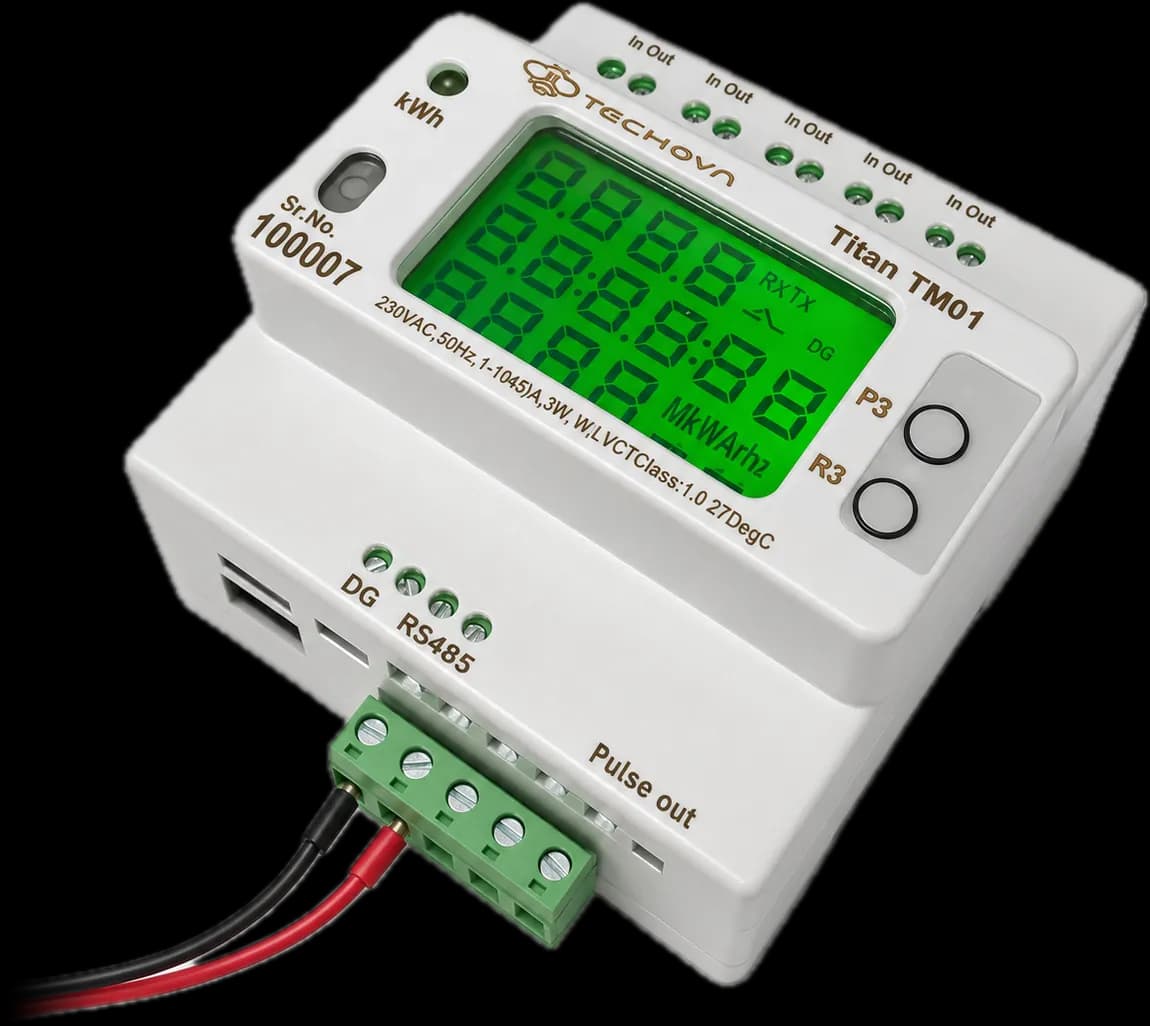
Commercial sub-metering is the practice of installing dedicated meters on each tenant feeder, floor, or major load — so landlords can bill tenants accurately, identify hidden waste, and meet regulatory disclosure requirements. Tech OVN's Titan smart meter does this with WiFi or Ethernet to a cloud dashboard, no gateway hardware required.
Why Sub-Meter?
Most commercial buildings have one utility meter for the whole building and a single bill that gets divided up using rough proportional formulas — square footage, headcount, or worse, equal split. Tenants who consume less subsidise tenants who consume more. Landlords have no visibility into where energy is being wasted. Sustainability teams can't report Scope 2 emissions per tenant.
Sub-metering — a core capability of any real Energy Management System (EMS) — replaces the formula with measurement. Every tenant pays for exactly what they use. Every floor has a baseline. Every major load can be tracked over time. And studies consistently show buildings with sub-metering reduce energy costs by 10–30% within the first year — just because the data exists and someone is looking at it.
What Titan Sub-Metering Delivers
Five outcomes from accurate, granular metering across every tenant and circuit.
Per-Tenant Cost Allocation
Defensible meter-backed bills. Tenants see their own consumption, their own cost, their own carbon footprint. Disputes drop sharply.
Cost Recovery for Landlords
Stop subsidising heavy users. Bill each tenant for their actual share — including HVAC, lighting, EV charging, and tenant equipment.
Energy Waste Detection
After-hours loads, phantom power, mis-set HVAC schedules — sub-metering surfaces the patterns that bulk billing hides.
Tenant Dashboards
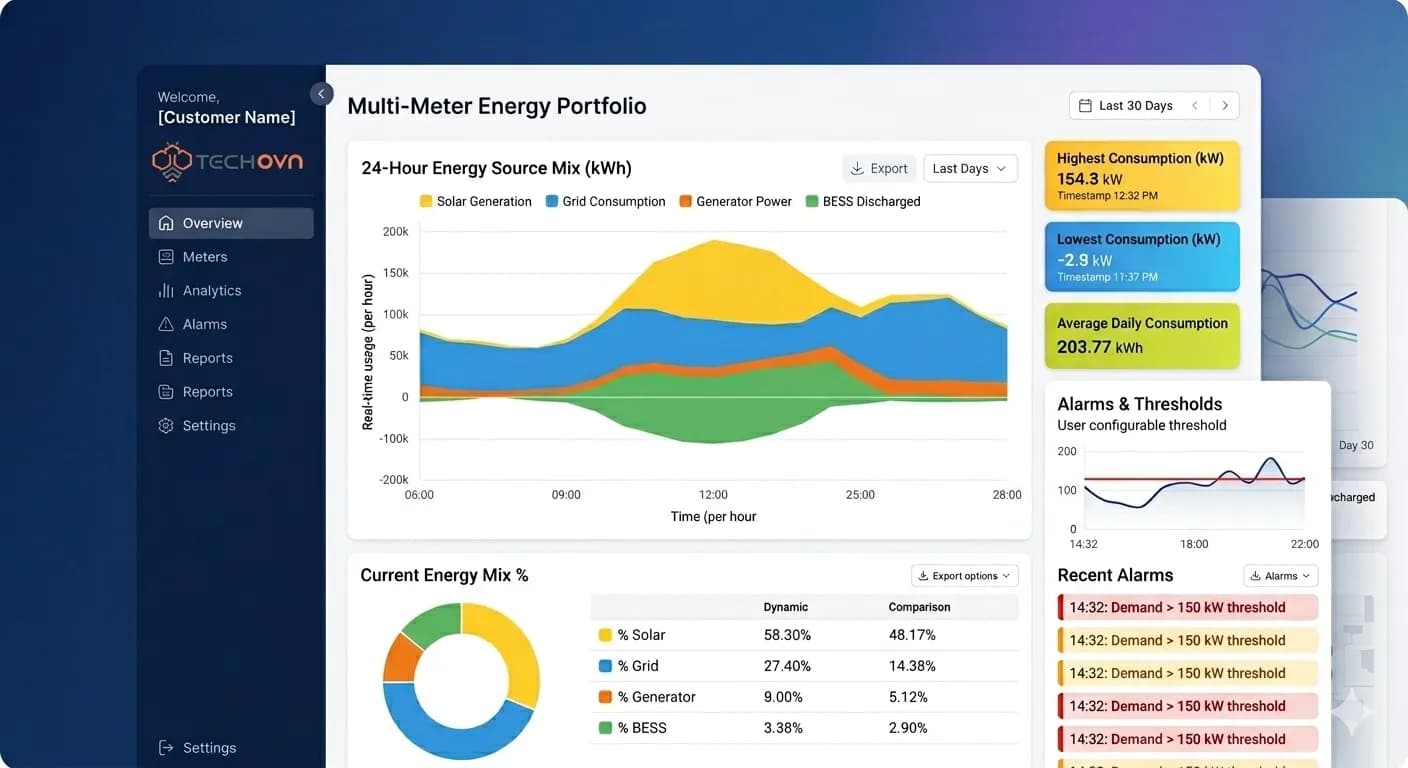
Through the Energy Intelligence Platform, tenants get role-restricted dashboards showing only their data. Property managers get the portfolio view.
Compliance Reporting
ESG disclosure, CSRD, BRSR, GRESB, LEED, and BREEAM all benefit from sub-meter data. CO₂ on every meter, calculated per source.
Where It Fits
Five common building types where Titan sub-metering pays back quickly.
Office Buildings & Co-Working
Allocate energy cost per tenant, per floor, or per workspace. Show ESG-conscious tenants their consumption and emissions.
Shopping Centres & Retail Parks
Per-unit billing for retail tenants. Common-area tracking. HVAC and lighting cost transparency.
Industrial Estates
Sub-metering on each unit's incoming feeder. Heavy machinery, compressors, lighting — all tracked separately.
Mixed-Use Developments
Residential plus commercial in one building, with different tariffs and different reporting requirements per occupant type.
Hotels & Hospitality
Track HVAC, F&B, laundry, lighting, and back-of-house systems separately. Tie consumption to occupancy.
How It's Different from a Gateway System
Traditional sub-metering systems use Modbus RTU meters connected to a gateway, which connects to a server, which runs licensed software, which renders the dashboard. Every layer adds cost, complexity, and a maintenance contract.
Titan connects directly to the cloud over WiFi or Ethernet. No gateway. No on-premise server. No annual software licence per meter. The same hardware that meters the circuit also commissions itself via the Titan App, buffers data during outages, and rolls up automatically into a multi-site industrial energy monitoring system in the cloud.
For a 20-meter deployment, that's roughly the cost of the meters alone — versus meters + gateways + server + licences for a traditional setup.
Frequently Asked Questions
Seven common questions about commercial sub-metering, accuracy, tenant billing, and ESG reporting.
Related products & solutions
The Tech OVN sub-metering stack — meter, platform, and the adjacent monitoring use cases that pair with tenant billing.
Titan — 3-Phase Smart Energy Meter
The Class 0.5S DIN rail meter that powers commercial sub-metering. WiFi + Ethernet + RS485, no gateway needed.
Learn More →Energy Monitoring Solution
Per-circuit, per-floor, per-tenant dashboards. Real-time consumption, demand profiling, anomaly alerts.
Learn More →Energy Intelligence Platform
The cloud platform behind Titan — multi-site portfolios, automated billing exports, ESG-ready reports.
Learn More →Multifunction meter (MFM)
3-phase Class 0.5S multifunction meter in a 96 × 96 mm panel housing, with RS485 Modbus, Modbus TCP and MQTT. Measures kWh, kVAh, kVArh, PF and demand. From ₹ 7,500.
Learn More →What Sub-Metering Costs
Priced per measurement point rather than per site, so a deployment can start with one tenant feed.
| Parameter | Specification |
|---|---|
| Cost per measurement point | ₹8,500 – ₹18,300 per Titan meter, or from ₹7,500 for the RS485-only panel variant — one meter per tenant or department. |
| MOQ — catalogue | None. A pilot or an evaluation order can be one unit. |
| Lead time | 4 weeks from confirmed PO. |
| Warranty | 2 years standard from date of dispatch. |
| Per-site infrastructure | None. WiFi and Ethernet are built into the meter — no energy-server PC, data concentrator or per-site software licence. |
| Cloud dependency | None required. Modbus RTU/TCP and BACnet are local and work with no internet connection; the Tech OVN platform is optional. |
Ready to sub-meter your building?
Talk to our team about Titan sub-metering for your tenant billing, ESG reporting, or waste reduction project.