
Energy Management System for Commercial Buildings, Offices & Malls
An Energy Management System (EMS) for commercial real estate on the Tech OVN Energy Intelligence Platform — per-tenant chargeback billing, HVAC and chiller-plant optimisation, and LEED / IGBC / GRIHA / BRSR-aligned reporting. Deployed across malls, IT parks, office towers, and mixed-use developments.
Flat-Rate Billing Hides Waste. So Does Aggregated Consumption.
In most commercial buildings, tenants are billed on a flat per-sqft basis, common-area HVAC runs on a fixed schedule whether occupied or not, and the only line of sight building owners have into consumption is the monthly utility bill. A real Energy Management System replaces all of that with per-tenant, per-floor, per-asset visibility — turning consumption data into chargeback bills, BMS optimisation inputs, and ESG disclosures.
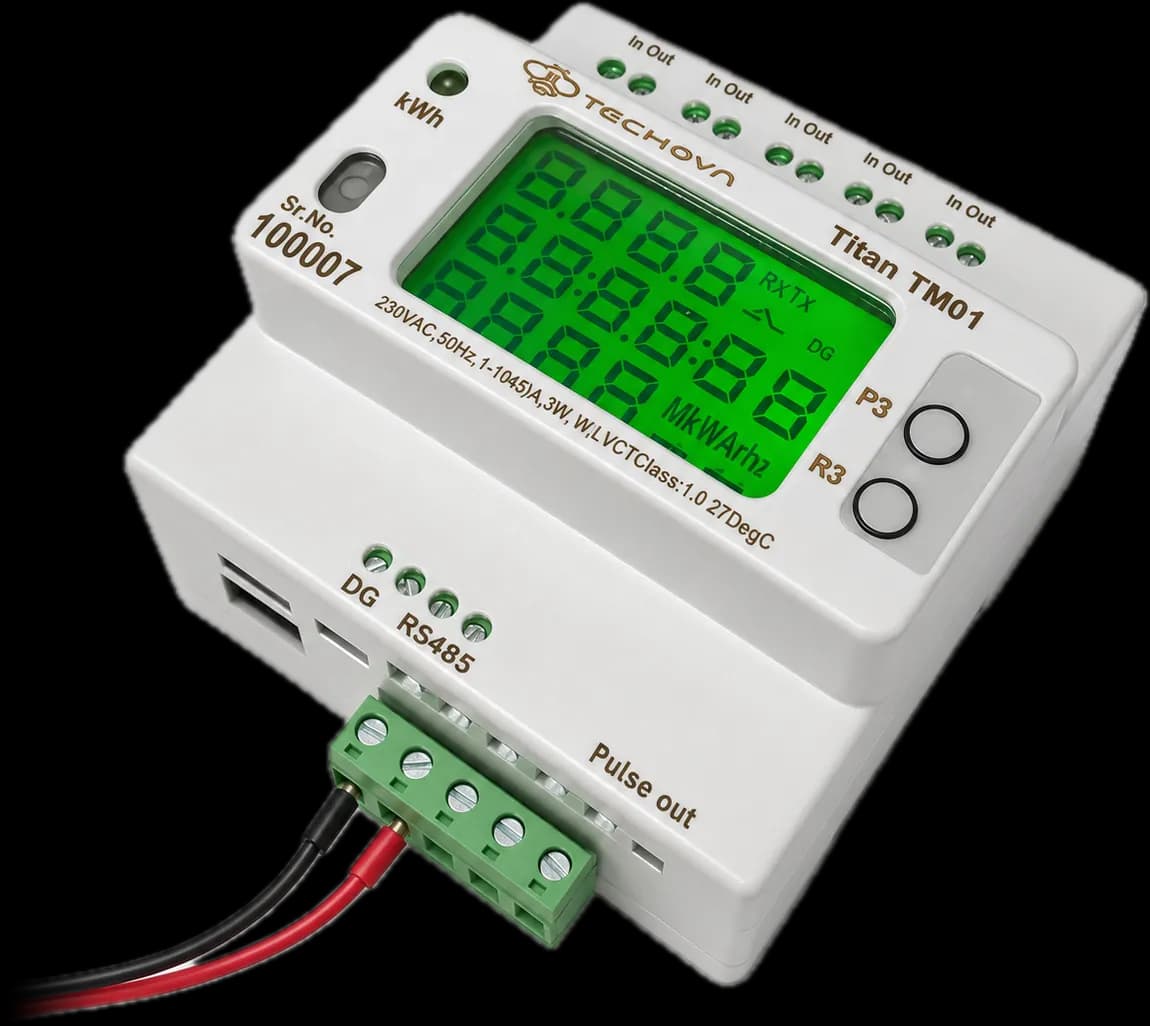
The Tech OVN EMS combines Titan meters with the Tech OVN Energy Intelligence Platform — a multi-tenant cloud SaaS built for commercial real estate. Deployed across malls, IT parks, office towers, and mixed-use developments — by building owners, property managers, REIT asset managers, and ESG / sustainability teams. Meters report to the platform natively over secure MQTT, no gateway hardware required.
What a Commercial-Building EMS Does
Six capabilities that turn passive building data into tenant bills, BMS optimisation, and ESG disclosures.
Per-Tenant, Per-Floor Submetering
Titan meters at every tenant supply, every floor, every common-area panel. Tenant-level chargeback with audit-ready bills replaces flat-rate billing — and exposes the floors quietly drawing 2× the average.
Tenant Chargeback Bills, Generated for You
Configurable tariff structures (flat, ToD, demand, slabs) and automated monthly invoicing on the Tech OVN Energy Intelligence Platform. Each tenant logs in to see only their own consumption and bills.
HVAC & Chiller Plant Optimisation
Chillers, AHUs, cooling-tower fans, and pumps submetered individually. Identify the chiller running at the wrong sequence, the AHU that's still on after-hours, and the cooling-tower fan losing performance over time.
After-Hours & Phantom Load Detection
Real-time alerts for loads running outside scheduled hours. Phantom power, idle equipment, and after-hours HVAC are typically the biggest 10–30% energy savings opportunity in a commercial building — and the easiest to act on.
ESG / BRSR / LEED / GRIHA Reporting
Auto-calculated Scope 2 carbon emissions, renewable mix percentages, EPI (Energy Performance Index) per sqm. Audit-ready reports for BRSR (Business Responsibility & Sustainability Reporting), LEED EAc credits, IGBC / GRIHA assessments, and CDP submissions.
Multi-Property Portfolio View
Benchmark energy intensity across your buildings — kWh per sqm, kWh per occupied seat, EPI per asset. Identify your most efficient property and replicate its operating pattern across the portfolio.
Frequently Asked Questions
BMS vs EMS, tenant billing, LEED / IGBC / GRIHA, BRSR, and ROI — common questions from building owners, property managers, and ESG teams.
Tenant chargeback, HVAC optimisation, ESG-ready — on one platform
Talk to our team about a pilot at one building. Titan meters, Tech OVN Energy Intelligence Platform, LEED / IGBC / GRIHA / BRSR-aligned reporting.