
Energy Management System for Hospitals & Multi-Specialty Healthcare
An Energy Management System (EMS) for hospitals on the Tech OVN Energy Intelligence Platform — OT and ICU critical-load monitoring, DG / grid / UPS redundancy validation, departmental cost allocation, and NABH-aligned reporting. Titan and Titan PQ meters on every critical feeder.
In a Hospital, Energy Data Is Patient-Safety Data
A transfer-switch glitch in an OT, a UPS battery string that degrades silently, a chiller drift in NICU — these aren't just energy events. They're patient-safety events. A hospital's Energy Management System has to do two jobs at once: identify the 20–30% energy waste buried in HVAC, sterilisation and lighting; and continuously validate that the critical loads keeping patients alive are on the redundancy path they were designed for.
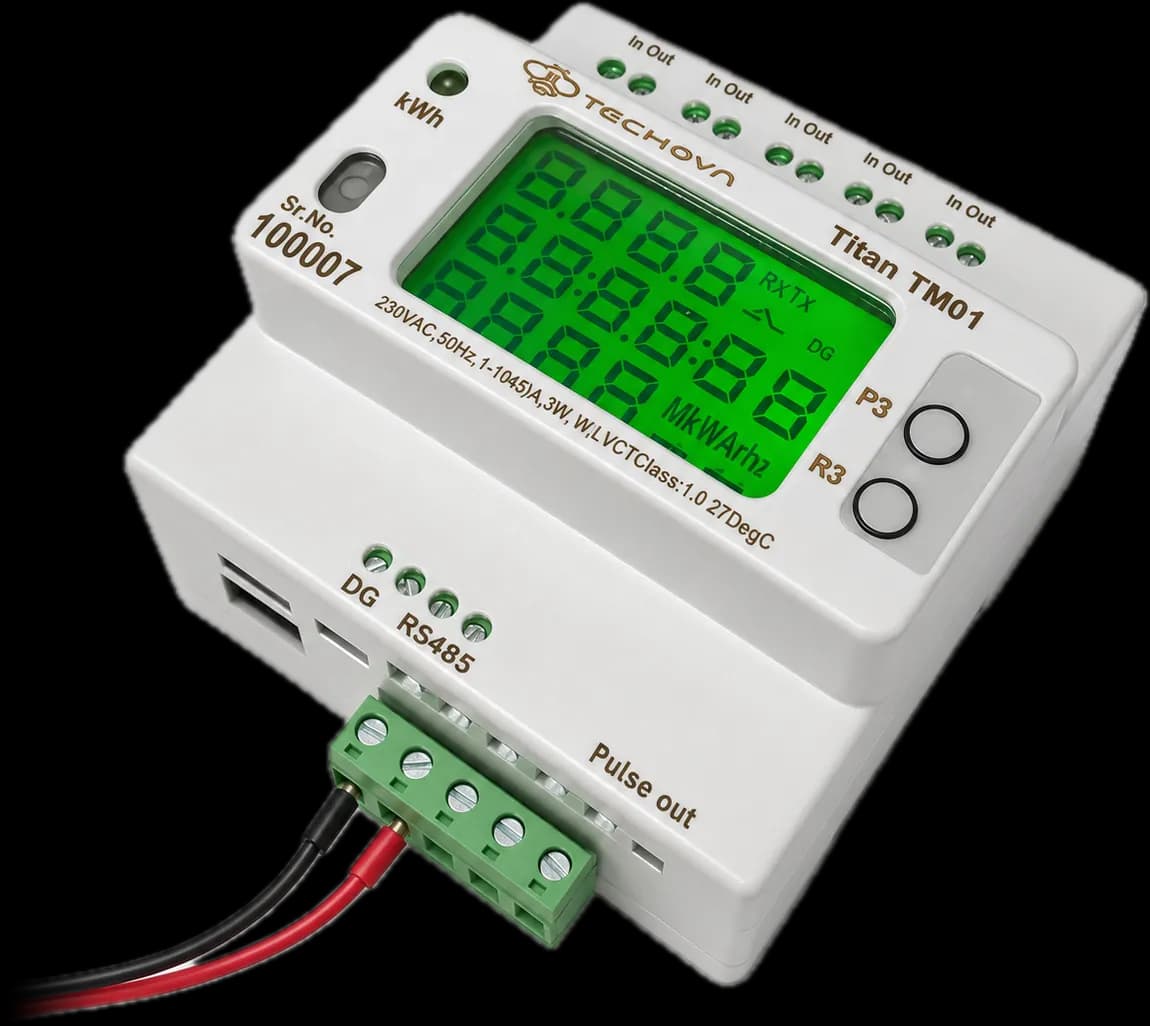
The Tech OVN EMS combines Titan submetering, Titan PQ power-quality logging on OT / ICU feeders, and independent metering of grid, DG, and UPS sources — all on the Tech OVN Energy Intelligence Platform. Deployed across multi-specialty hospitals, NABH-accredited facilities, and IGBC Green Hospital projects in India and the Middle East — by facilities directors, clinical engineering teams, and corporate sustainability heads.
What a Hospital EMS Does
Six capabilities that combine clinical-grade reliability with waste-reduction analytics — on the same platform.
OT / ICU Critical-Load Monitoring
Continuous monitoring of operation theatre and ICU power feeds — voltage stability, frequency, sags, swells, and transient events. Catch a deteriorating UPS or a degrading DG switchover before it interrupts a procedure.
DG / Grid / UPS Redundancy Validation
Track grid, diesel generator, and UPS feeds independently. Detect transfer-switch operations, verify that critical loads are actually on the right source, and log every outage and switchover for NABH evidence.
Departmental Cost Allocation
Submetering by department, floor, and wing — OT, ICU, radiology, laboratory, OPD, cafeteria, administration. Each department sees its own energy KPI; finance gets defensible numbers for cost recovery.
HVAC, Chiller & Sterilisation Load Tracking
HVAC and sterilisation are typically the top two energy consumers in a hospital. Per-chiller, per-AHU, and per-autoclave submetering surfaces waste — including the 24×7 zones that don't need 24×7 cooling.
Power Quality Logging (Titan PQ)
Power-quality monitoring on critical feeders using Titan PQ — sag / swell logs, harmonic distortion analysis, and event reports — useful for equipment-failure investigation and warranty disputes.
NABH & Green Hospital Reporting
Audit-ready energy reports for NABH accreditation evidence, IGBC Green Hospital ratings, and ESG / sustainability submissions. Auto-generated PDF / Excel reports per department, per shift, per quarter.
Frequently Asked Questions
NABH, OT / ICU power quality, departmental cost allocation, redundancy validation — common questions from hospital facilities and clinical engineering teams.
Critical-load reliability and cost visibility — on one platform
Talk to our team about a pilot at one wing or one hospital. Titan and Titan PQ meters on critical feeders, Tech OVN Energy Intelligence Platform, NABH-aligned reporting.